
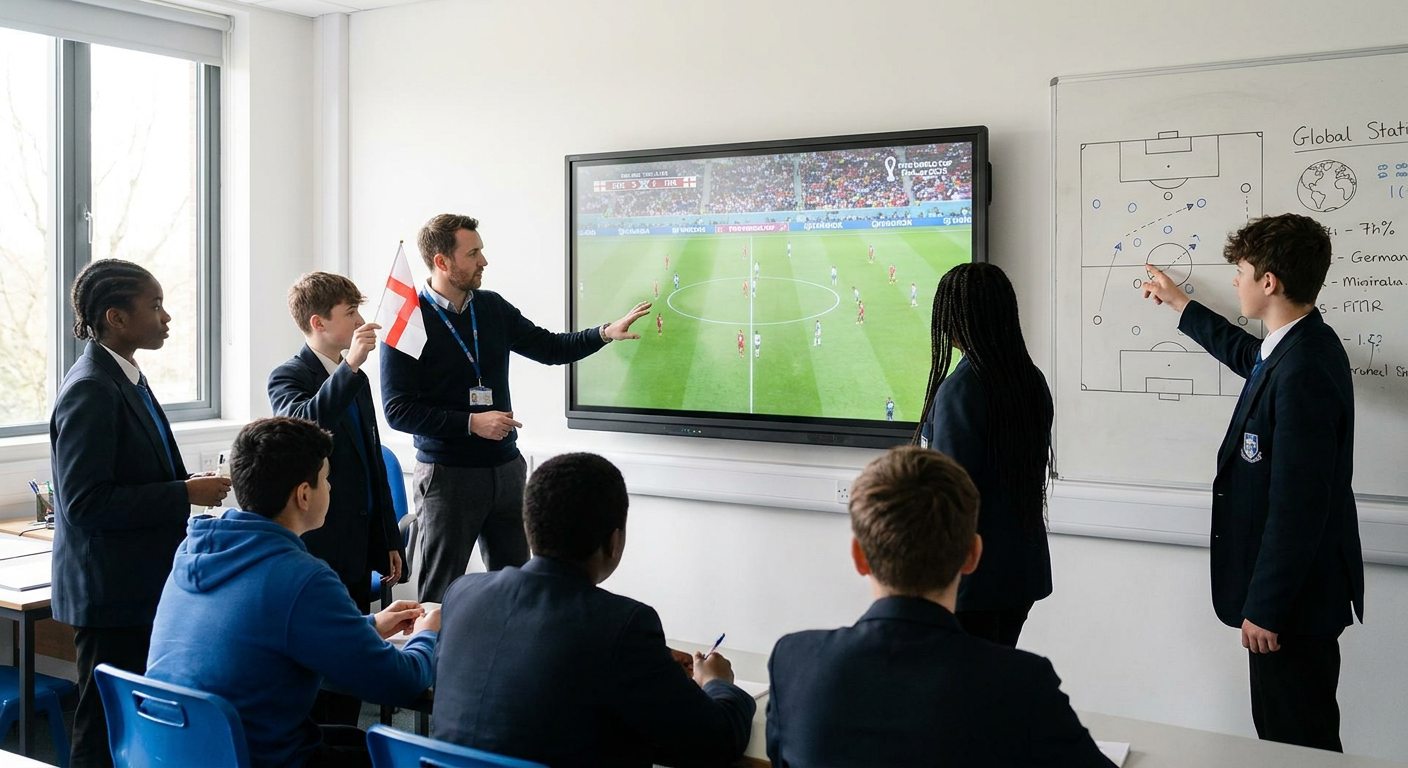
The World Cup Final: The Best Classroom Isn't Always Four Walls
How tomorrow's biggest football match could become your child's biggest learning opportunity
Tomorrow, millions of people around the world will stop what they're doing to watch the World Cup Final.
For ninety minutes, families will sit together. Friends will debate every decision. Children will ask endless questions.
Who should start?
Was that really a foul?
Why did they choose that formation?
Should VAR have overturned it?
It's easy to think football is "just a game."
But moments like tomorrow remind us that some of the most powerful learning doesn't happen in classrooms at all.
It happens through conversation.
Football Gets Children Talking
One of the biggest concerns teachers have isn't simply reading or maths.
It's confidence.
Many children struggle to explain their thinking, justify opinions or speak confidently in front of others.
Yet put a football match on...
...and suddenly they're analysing tactics.
Predicting outcomes.
Defending opinions.
Negotiating disagreements.
Using new vocabulary.
Listening to other viewpoints.
Without even realising it, they're developing some of the very skills schools are working hard to build.
The Skills Hidden Inside Every Match
Watching football isn't passive when adults make it interactive.
Ask questions like:
Why do you think the manager made that substitution?
What would you have done differently?
Who has been the best player so far?
What makes a great captain?
How do you think the losing team feels right now?
What might happen next?
These simple conversations encourage children to:
Think critically
Explain reasoning
Listen respectfully
Build vocabulary
Develop confidence speaking aloud
Those are lifelong skills.
Winning Isn't the Biggest Lesson
The World Cup isn't just about trophies.
It's about resilience.
Pressure.
Teamwork.
Leadership.
Communication.
Decision-making.
Every player on the pitch is constantly communicating—verbally and non-verbally.
The best teams don't simply have the most talented players.
They have the strongest communication.
Exactly the same is true in classrooms.
Conversation Builds Confidence
At Learning Loft, we believe confidence grows through conversation.
That's why we created LoftTalk.
Rather than simply asking children to "speak more," LoftTalk helps schools, tutors and families develop speaking and listening in a meaningful way.
Children can:
practise speaking aloud
answer thought-provoking questions
reflect on their responses
build confidence over time
receive structured feedback across key areas of oracy
Because communication is a skill—not a talent.
And like football...
It improves with practice.
Tomorrow's Challenge
As you watch the World Cup Final tomorrow, try something different.
Pause during half-time.
Ask your child what they've noticed.
Encourage them to predict the second half.
Ask them to explain why they think one team is playing better.
You might be surprised by the conversation that follows.
Those moments could be just as valuable as the football itself.
Learning Beyond the Final Whistle
The final whistle will blow tomorrow.
One team will lift the trophy.
The celebrations will end.
But the conversations don't have to.
Whether your child dreams of playing in the World Cup, becoming a teacher, leading a business or simply growing in confidence, the ability to communicate clearly will always matter.
So enjoy the match.
Celebrate the goals.
Debates are encouraged.
Because every great conversation is another opportunity to learn.
Keep the Conversation Going with Learning Loft
At Learning Loft, we've built engaging educational tools that help children develop confidence both inside and outside the classroom. From quizzes and games to LoftTalk, our innovative oracy assessment platform, learning becomes something families can enjoy together.
Because every conversation has the power to build confidence.